
The Plymouth Sensing network
A low-power, low cost, community run and open access way to generate real-time information on conditions across the city.
As a social enterprise we have a mission to help Plymouth’s communities and businesses to use data better. A fundamental step is about helping all the businesses and community groups in the city to access more, and better, data.
We already run https://plymouth.thedata.place - the home of open data published by the city council and partners, and this project builds on real time dashboards emerging alongside these static data sets.
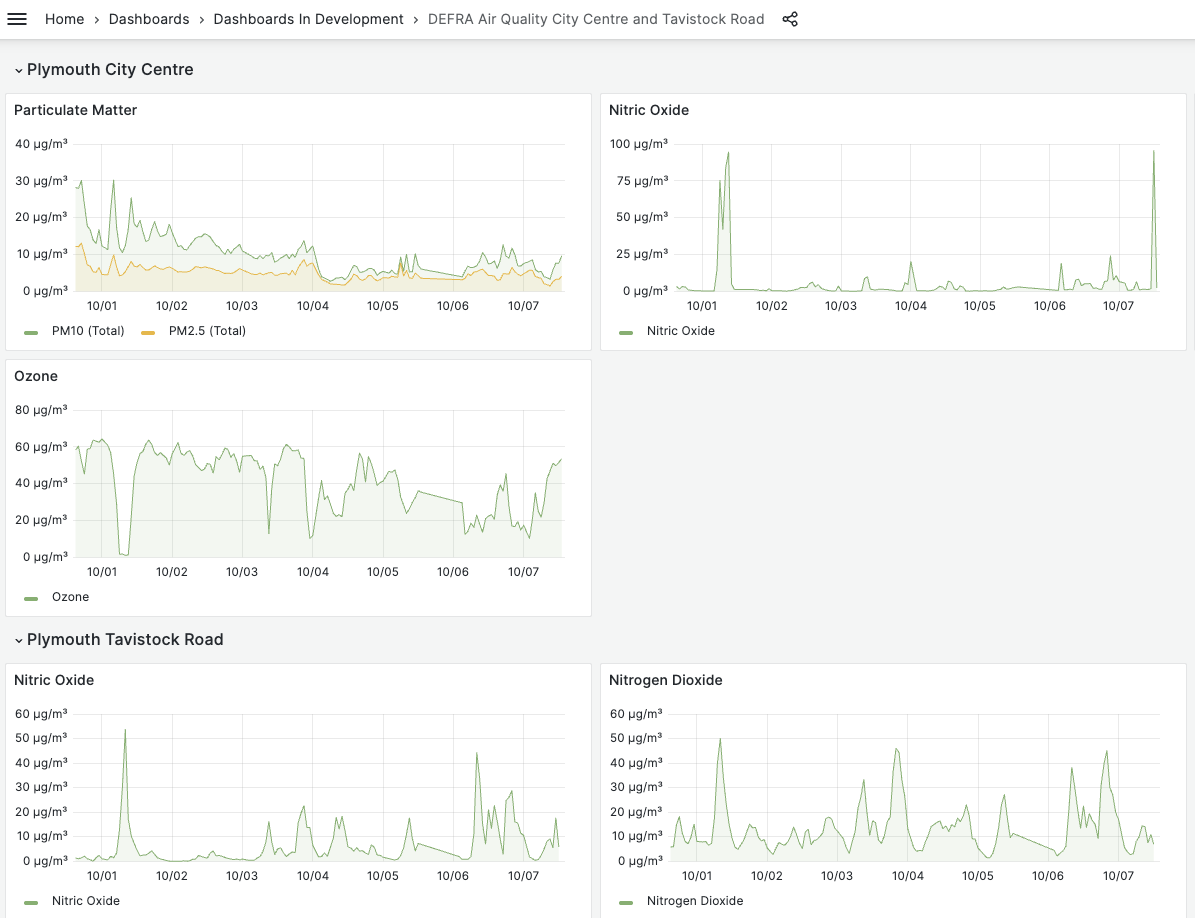
For example, take a look at https://tick.thedata.place/grafana/d/ABIcbeVMk/defra-air-quality-city-centre-and-tavistock-road?orgId=1 - a real time dashboard covering air quality in the City Centre.
Real time sensing topics such as temperature, air quality, humidity, sound and light levels are all very important for quality of life and retail or hospitality businesses, in particular.
Real time data in the city uses an open community network using LoRAWAN technology - this is low power, long range, low bandwidth technology which is open access and perfect for sensors. Sensors then use this network and can process, store and share their data using our server.
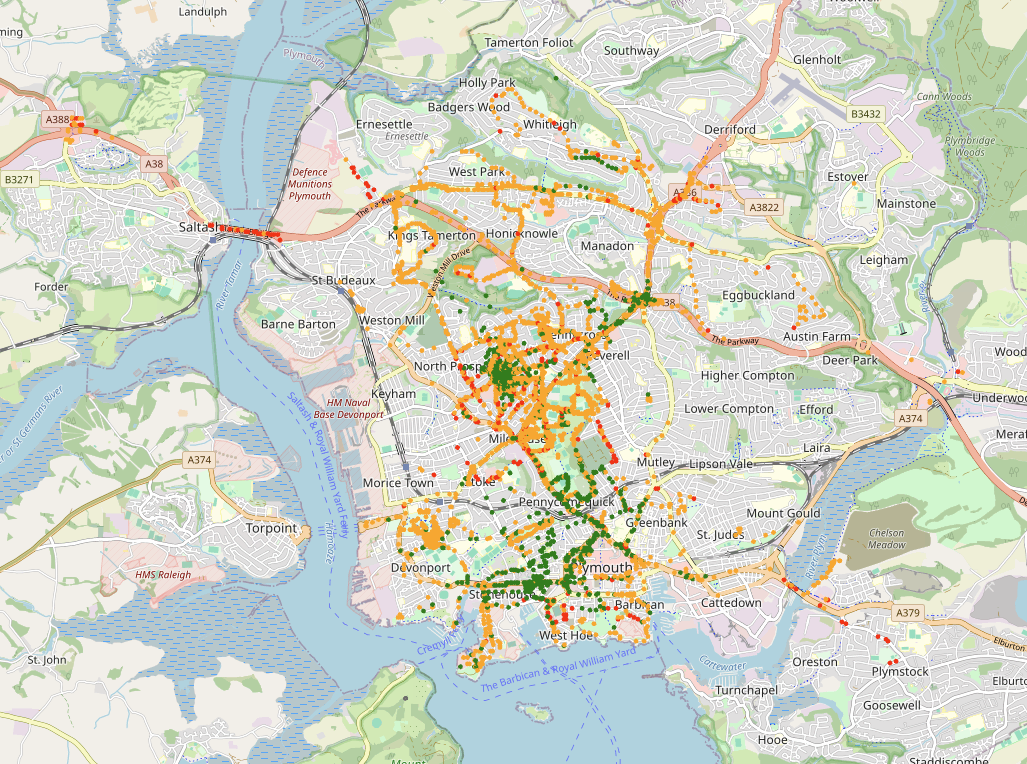
We’re building out this LoRaWAN coverage in the city, and you can see the latest coverage map here: https://tick.thedata.place/map/
Between the sensors, the LoRaWAN network, our Node-Red processing platform, a real time database, and these dashboards, this real time data platform is currently being built out by us as a volunteer effort.
Use and access of the data is free for everyone and we want to keep it that way, and so to take this further we need the help of businesses to do it.
Expanding the range and quality of data on the platform means:
Improving LoRAWAN coverage in the city
Increasing the number of sensors
Building new dashboards to show this data
Improving data governance and sharing.
You can help us in a number of ways:
Volunteer to help us map the current coverage across the city and identify not-spots
Help us build the mapping sensors
Walk around the city with them
Help us fill in the gaps in the map
Volunteer to help us deploy new sensors
Learn about the Internet of Things
Build new skills
Host a LoRAWAN gateway at your business premises
We just need power and a WiFi or wired internet connection
possible installation costs for larger gateways that need a qualified electrician (around £50)
Buy us a coffee to help cover our hosting costs
Contribute to the costs of sensors. Example sensors include:
Air temperature and humidity sensors (about £25)
CO2 Sensors (around £100)
Flooding sensors (around £40)
Air quality sensors (about £150)
Noise level sensor (about £60)
Vibration sensor (about £300)
AI ToF people counting sensor (at about £800 this is on the expensive end of things, but potentially commercially useful)
There are many more examples in the Things Network Device Repository.
You can also pair cheaper sensors with LoRaWAN transmitters, which takes more effort but results in cheaper, more flexible deployments.
Sponsor a LoRAWAN gateway (£100 for a small indoor gateway, up to around £1K for an outdoor model, fully installed by a qualified electrician)
Workshop with us on what new sensors we might need
Contact us if you want to help.